Sales consultant for startups in Spain: when to hire
Your startup has a product, but sales are unpredictable. Some days you book meetings and then you go weeks with no pipeline because you’re putting out product fires. If that’s you, you don’t need to “work harder”—you need a sales system that doesn’t depend on your daily energy.
In the early stage, the founder usually leads sales. That’s fine at first. The problem is staying in founder-led sales without a method: no cadence, no stage metrics, and every call is improvised. That’s where a consultant can either accelerate you—or get in the way—depending on timing.
This guide helps you decide when to hire a sales consultant in Spain, which signals show it’s the right moment, and what deliverables you should demand to avoid buying “smoke”.
When you should hire (and when you should wait)
Hiring because “you don’t like selling” almost always ends badly. First you need minimum clarity on customer, pain, and offer. Then you can accelerate with external support.
Signals you’re ready
- You already have 1–3 paying customers who bought to solve a similar pain.
- You can describe your ICP and anti-ICP with reasonable clarity.
- You’re willing to review metrics and calls weekly to iterate the process.
- You want to delegate, but you lack the structure to do it without breaking conversion.
Signals it’s not time yet
If you change segment or offer every week, validate focus first. In that scenario, a consultant can give you activity, but not real traction.
"💡 **Key Insight:** A consultant multiplies an early system. They don’t replace basic market validation."
Common mistake: buying leads when your sales system is missing
Many founders invest in visibility before fixing conversion. If you push more traffic into a broken funnel, you simply burn more cash. Fix the sales process first—then scale volume.
What a consultant should build inside a startup
- Acquisition cadence (outbound and/or inbound) with real follow-up.
- Short discovery to filter curiosity from real buyers.
- A demo script oriented to business impact.
- A “next step with date” rule in every opportunity.
- A usable CRM with clear stages and exit criteria.
If you’re in the first customers phase, outbound gives you learning speed. Pair this with the first customers plan.
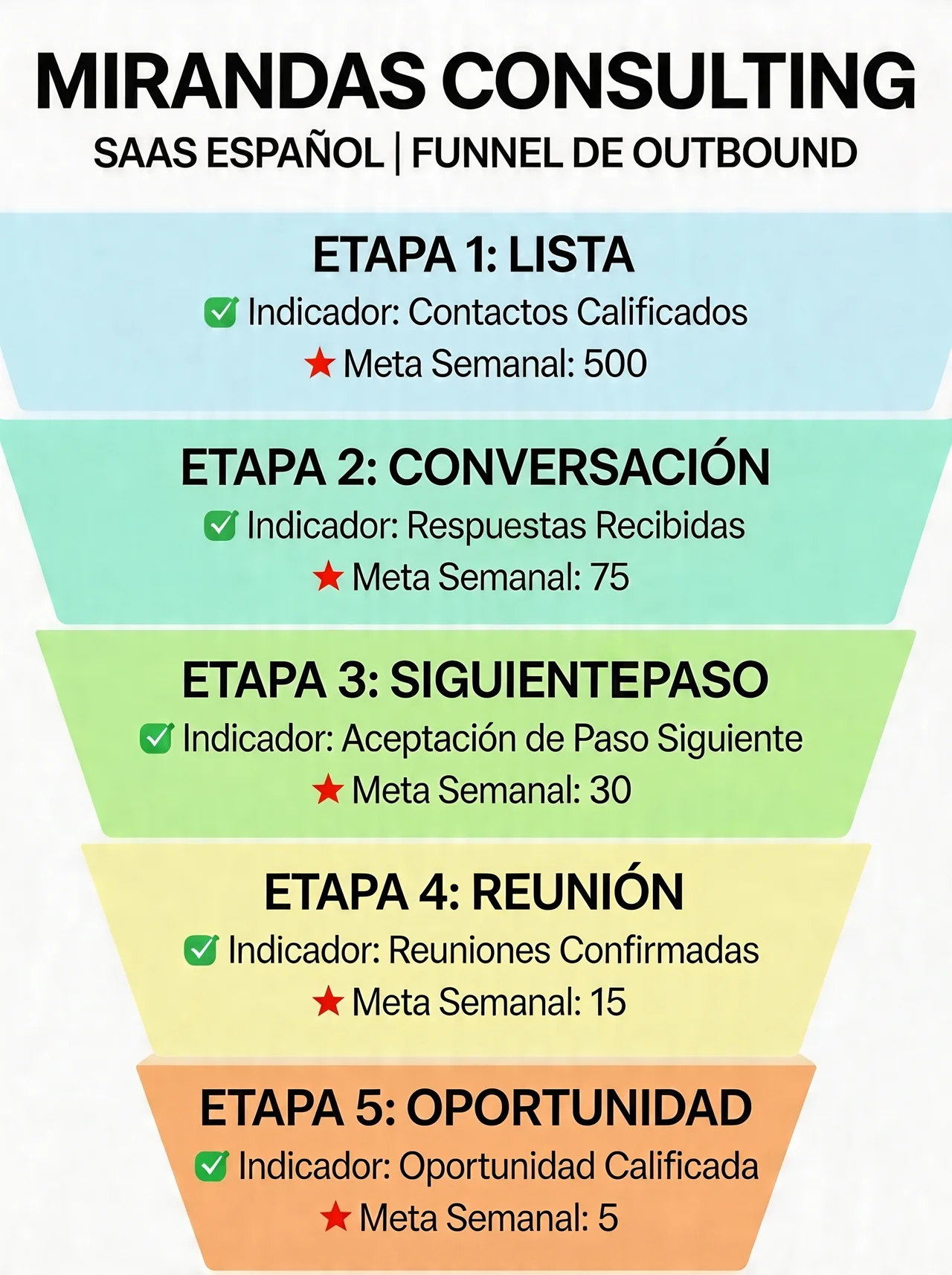
What deliverables to demand in 30/60/90 days
The difference between useful consulting and smoke is operational deliverables. If there’s no implementation in your tools, you’re paying for opinion.
Days 1–30: operational base
- Operational ICP with exclusion criteria.
- Initial prospecting and follow-up cadence.
- 10–15 minute discovery with required questions.
- CRM configured with stages and minimum fields.
Days 31–60: conversion improvement
Call audits, message iteration, and a better transition from meeting → opportunity. This is where you should see quality signals—not just activity.
Days 61–90: predictability and transfer
An initial playbook, a weekly routine, and preparation to delegate to SDR/AE roles. Without transfer, you’ll go back to chaos as soon as the project ends.
"⚠️ **Watch Out:** If everything depends on the consultant and nothing stays with the team, you didn’t buy a system—you rented crutches."
Summary and next step
Hire a sales consultant when you have fit signals and you need to turn effort into a repeatable process. If you still lack customer focus, validate first. If you have it, accelerate with a system.
Decision checklist for today
- Do you have 1–3 real customers with similar pain?
- Can you describe your ICP without vagueness?
- Do you have weekly bandwidth to execute changes?
- Are you buying a system—or just trying to outsource selling?
If you want to sanity-check your case in 30 minutes, request a free diagnosis and review our sales consulting services.
Frequently asked questions
- How much does a sales consultant for startups cost in Spain?
- It usually combines an initial design/implementation phase with monthly support. Pricing depends on sales maturity, cycle complexity, and scope (process only vs. also coaching and hiring). Evaluate ROI through stage conversion improvement and learning speed.
- When should I hire my first SDR or Account Executive?
- When you have a minimum validated process: clear ICP, a repeatable script, and stable stage metrics. Hiring before that often burns runway—people execute, but without a system they end up improvising.
- What results should I see in 30 days?
- In 30 days you should see order: an operational ICP, a structured CRM, active cadences, and first quality signals (useful replies and better-filtered meetings). If you don’t see these foundations, implementation risk is high.
- Does consulting help if my strategy is 100% inbound?
- Yes. Even if leads come inbound, you still need a conversion process: speed-to-lead, qualification, discovery, demo, and follow-up. Without that sales layer, traffic doesn’t become revenue.
- How do I spot “smoke” consulting in the first week?
- If they don’t ask for CRM access, don’t review calls, and don’t define stage metrics from day one, that’s a bad sign. Serious consulting works from operational evidence, not generic opinions.
- When do I move from a consultant to fractional leadership?
- When you already have process foundations and you need ongoing leadership to scale team and forecasting. That’s typically where a fractional sales director fits before jumping to a full-time VP.