B2B SaaS sales consulting in Spain: how to choose
Your SaaS works. You have happy customers. But sales don’t scale. One month you close three accounts and the next nothing comes in. The pipeline depends on your calendar and your energy as the founder. If you disappear for a week, the funnel dries up. That’s not a motivation problem—it’s a missing sales system.
At Miranda’s we see this pattern in B2B SaaS teams from 1 to 50 people: there’s product, real use cases, sometimes even some demand—but there isn’t a sales process that can be repeated without the founder. The hidden cost isn’t just lower revenue today. It’s not being able to hire, delegate, or forecast cash with confidence.
This guide helps you decide whether you need B2B SaaS sales consulting in Spain, which signals to look for before hiring, which deliverables to demand to avoid buying smoke, and which metrics you should see in 30/60/90 days. For the full context on sales structure, start with this pillar guide on the B2B SaaS sales process.
What B2B sales consulting actually fixes
Serious sales consulting isn’t just training the team or handing over an email template. The real job is to increase your close probability, reduce time-to-close, and lower the operational effort required from your team. Translation: more opportunities that move forward, fewer stuck deals, and more clarity on the next step.
Before you hire, identify your main bottleneck. If you don’t generate qualified meetings, the focus is pipeline. If meetings happen but proposals don’t, the issue is discovery. If proposals happen but deals don’t close, the bottleneck is usually the demo, objections, or follow-up. The right consulting starts with diagnosis and ends with daily execution inside your CRM.
Three questions you can’t leave to gut feel
- Which ICP converts best—and which profiles must we reject to avoid a noisy pipeline?
- What is the real stage conversion (lead → meeting → opportunity → won) in your sales process?
- Which signals tell you a deal will move forward vs. stall in week 3 or 4?
"💡 **Key Insight:** If you can’t answer these three questions with CRM data, you don’t have an effort problem. You have a funnel design problem."
Why B2B SaaS in Spain loses deals that were already alive
Mistake 1: a product tour instead of impact
In many SaaS startups, the demo is a feature walkthrough. The prospect understands buttons, but not ROI. When that happens, the decision gets postponed. For tactical depth, review why your SaaS demos don’t convert.
Mistake 2: shallow discovery
Without solid discovery, you don’t know priority, urgency, or the cost of the current problem. And if you don’t know that, you can’t tie your proposal to a real business change. In B2B, selling isn’t presenting. It’s diagnosing before prescribing.
Mistake 3: follow-up with no cadence and no value
Follow-up wins more deals than the initial presentation. What we see when a startup stops improvising is simple: they define a phase-based contact sequence (immediate, week 1, and subsequent weeks) with proof, cases, and objection handling. If your team only sends “did you get a chance to look?”, you’re losing winnable deals.
"⚠️ **Watch Out:** More lead volume won’t fix a broken funnel. Fix conversion and follow-up first—then scale acquisition."
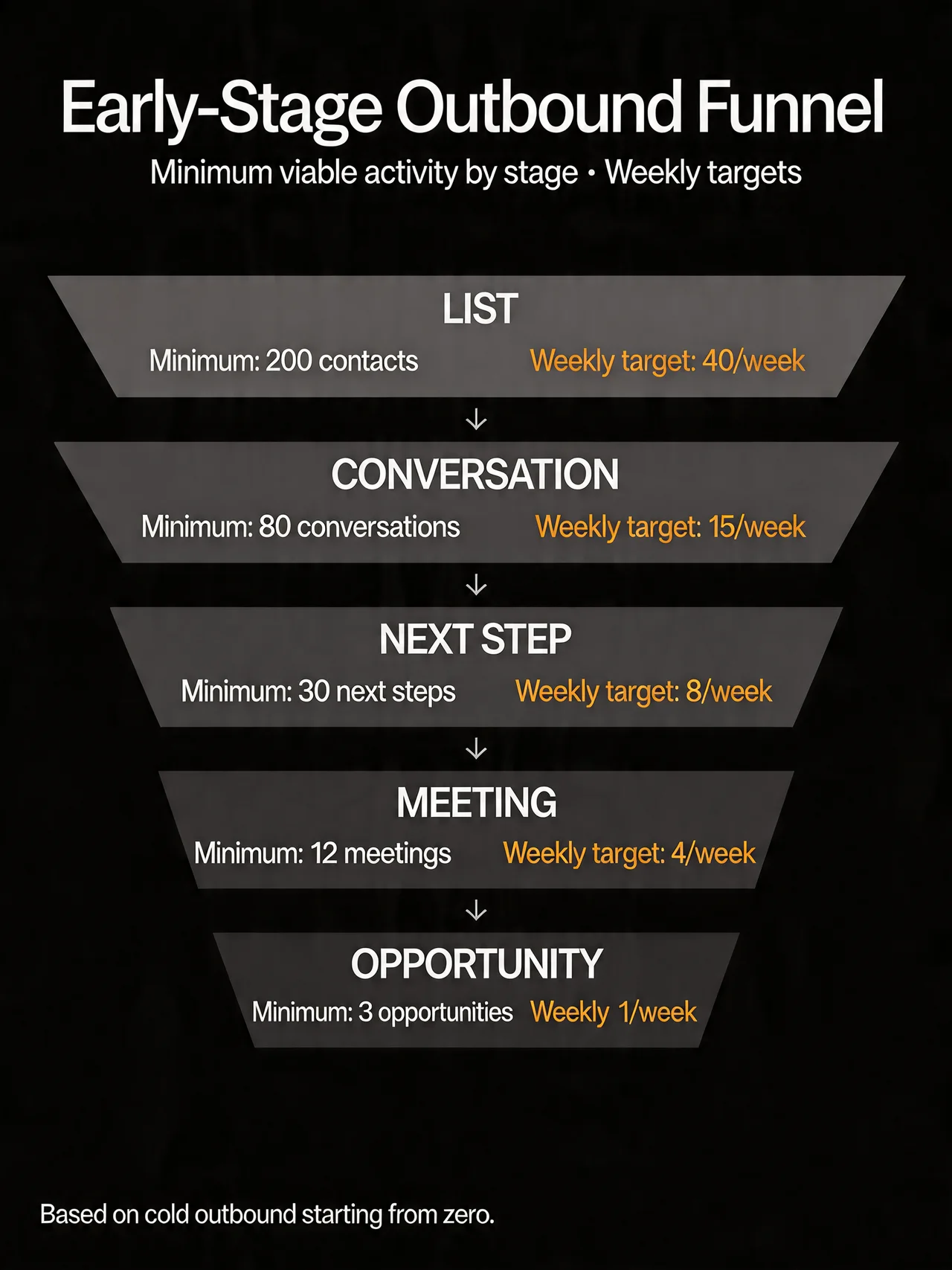
Deliverables you must demand (and red flags to reject)
If you buy consulting and a month later you’re selling the same way, you paid for expensive theory. The minimum output of good consulting is a system running inside your tools—not a slide deck.
Minimum deliverables in month 1
- Stage-by-stage diagnosis to find where the pipeline breaks, backed by CRM evidence.
- Operational ICP definition with inclusion and exclusion criteria.
- Discovery script, pain-based demo structure, and follow-up scripts for common objections.
- CRM structure with stages, exit criteria, and required fields.
- A living playbook to train SDR/AE roles and reduce founder dependency.
Common red flags (sales smoke)
- They promise “more leads” without auditing conversion or opportunity quality.
- They avoid reviewing real calls or your pipeline history.
- They don’t define success metrics per stage or an implementation calendar.
- Everything depends on them and nothing becomes transferable to the team.
To compare proposals objectively, always cross cost with expected outcome. You can support that comparison with references like HubSpot State of Sales and digital adoption data from ONTSI.
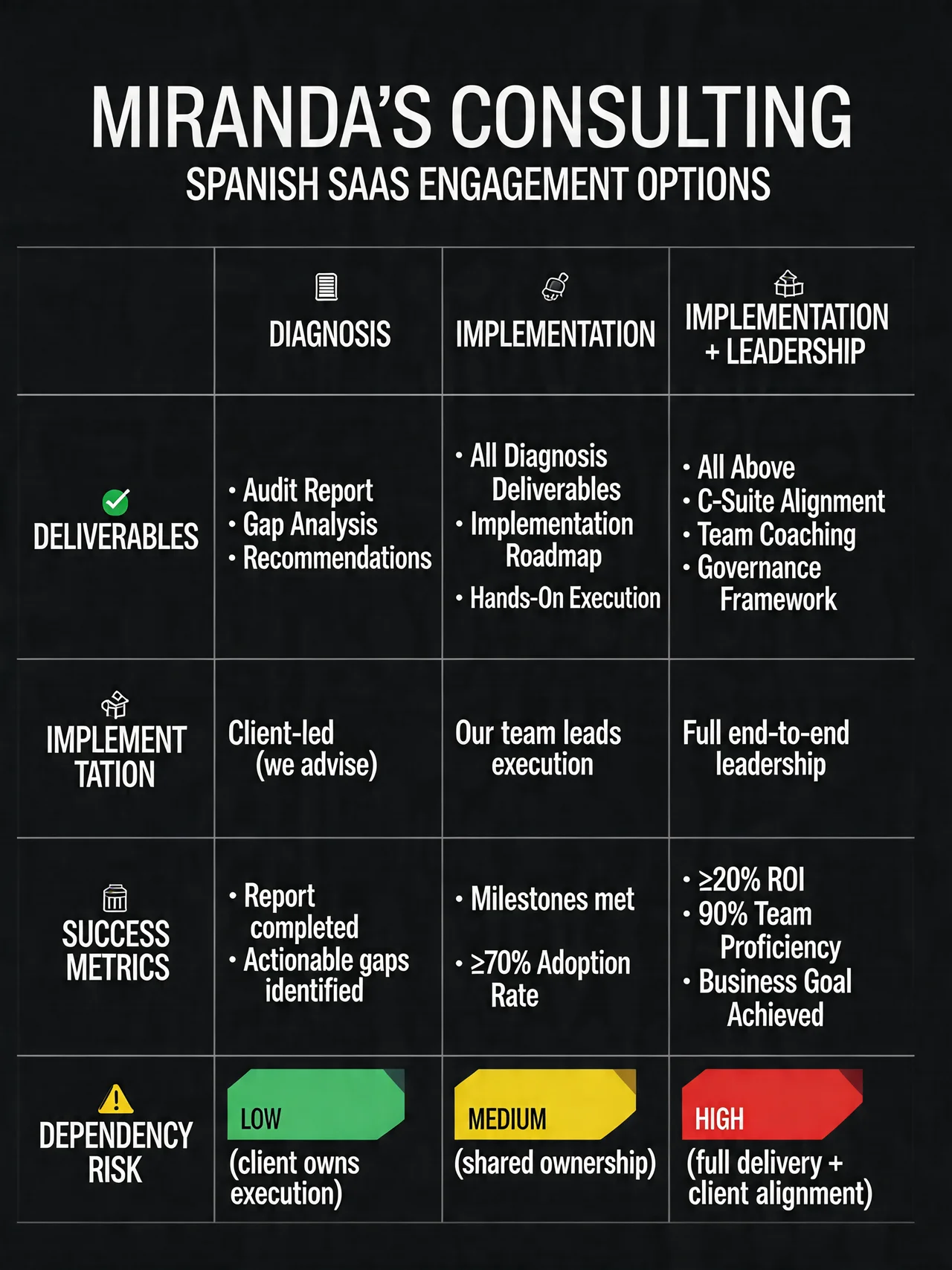
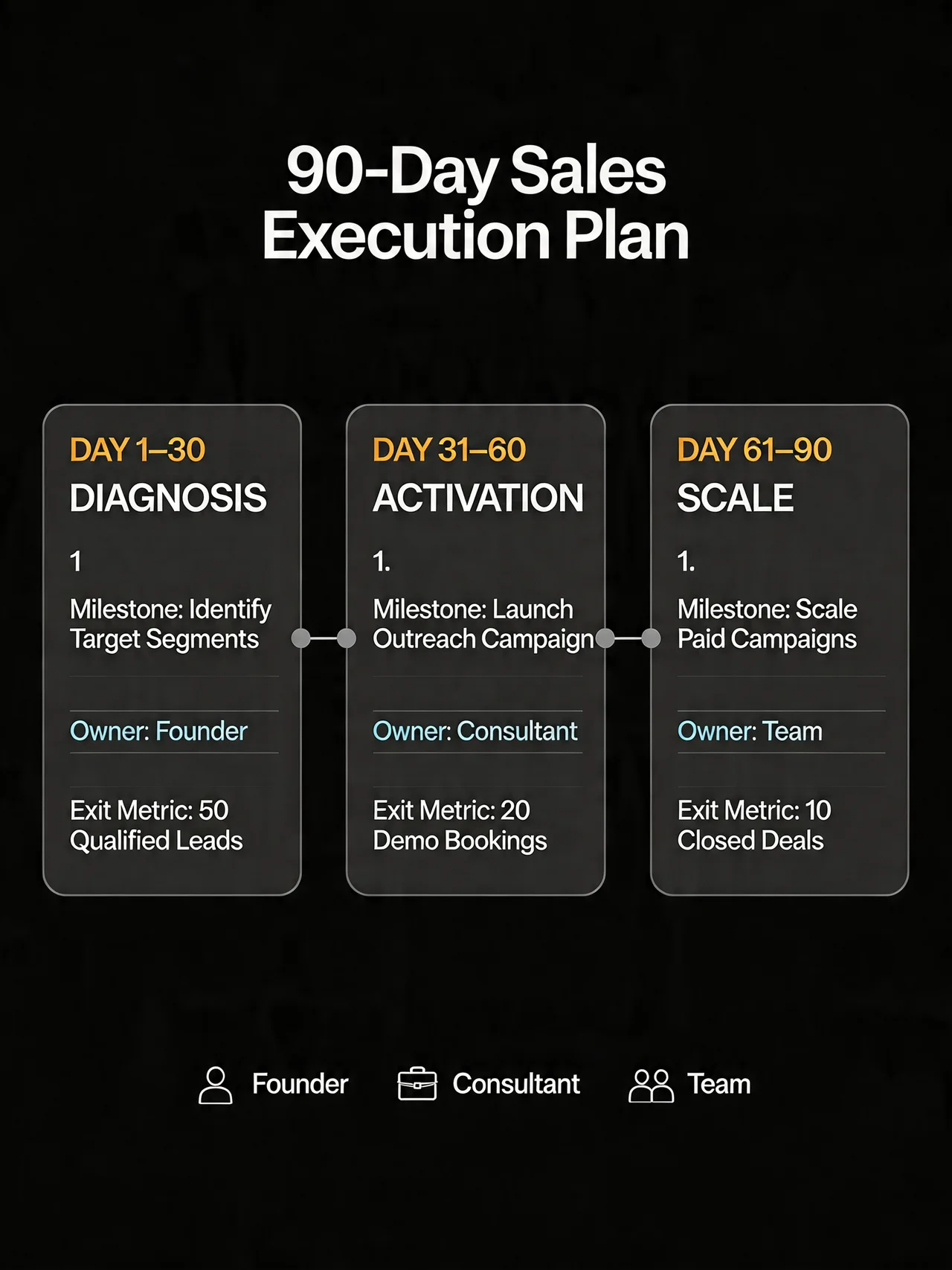
A 30/60/90 plan to install a SaaS sales system
The goal isn’t to close one big contract. The goal is to build a repeatable sequence for pipeline, qualification, demo, and follow-up that someone else can execute with quality. This is the tempo we typically apply at Miranda’s.
Days 1–30: diagnosis and operational order
- Funnel audit: meetings, no-shows, proposals, and wins.
- ICP definition and main message by segment.
- CRM restructure and minimum fields for decision-making.
- Initial outreach and follow-up cadence activated with the team.
Days 31–60: conversation quality and stage progression
- Discovery with priority, impact, and urgency questions.
- Demos oriented to business case—not a feature catalogue.
- Follow-up sequences by objection (risk, time, budget).
- Weekly review of stuck opportunities and the real reason for blockage.
Days 61–90: predictability and transfer to the team
- Playbook consolidated for onboarding new hires.
- Weekly sales rituals with stage metrics and clear actions.
- Decision criteria for when to add SDR/AE roles or fractional leadership.
- Continuous improvement plan with message/channel/objection experiments.
"📌 **In Short:** First improve clarity and conversion. Then scale volume. Reverse the order and you only scale chaos."
If you’re still validating your first logos, combine this with the first customers plan for B2B SaaS.
Summary and next step
If your SaaS has product but unstable sales, the right consulting helps you install a system that increases close rate and reduces founder dependency. Bad consulting leaves you slides. Good consulting leaves you process, metrics, and execution.
Practical next step: review your last 20 opportunities and tag the real loss reason. If you can’t do it with clear data, start with a sales process audit or explore more content in the B2B sales guides hub.
Quick checklist before you hire
- Do they implement inside the CRM, not just give recommendations?
- Is there a 30/60/90 plan with owners and stage metrics?
- Does it include real transfer to the team to avoid dependency?
- Is it connected to your current acquisition channels (outbound, content, partners)?
Frequently asked questions
- How much does B2B SaaS sales consulting cost in Spain?
- It typically combines an initial diagnosis + implementation phase and a monthly support cadence. The range depends on complexity, team size, and sales cycle length. If someone gives you a price without auditing pipeline, CRM, and real calls, be sceptical—they can’t estimate serious impact.
- How soon should real results show up?
- In 30 days you should see order: a clear ICP, a clean CRM, and disciplined follow-up. In 60 days stage progression usually improves. In 90 days, if your cycle allows, you should see more wins or higher predictability. Final revenue impact depends on your sales cycle duration.
- Should I hire sales reps before or after the consulting engagement?
- Usually after. Install the process, scripts, and metrics first. If you hire before having a system, the rep improvises and you burn time and cash. The exception is when you already have a validated method and you only lack execution capacity.
- What’s the difference between sales consulting and a marketing agency?
- Marketing focuses on generating demand and visibility. Sales consulting focuses on converting that demand into revenue: qualification, discovery, demo, objections, follow-up, and close. If you have leads but they don’t progress to contracts, the main issue is usually sales execution and process.
- How do I know if consulting is driving quality vs. just activity?
- Measure quality by stage progression, not by task volume. If meetings increase but proposals or wins don’t, you lack fit or process. Good consulting defines stage metrics, reviews losses with evidence, and adjusts cadences and messaging weekly.
- Does this approach work for very niche SaaS in Spain?
- Yes—and niche SaaS often needs it more. The more specific your ICP, the more precise diagnosis and messaging become. The goal isn’t to talk to more companies. It’s to talk to the right ones and move them through a clear process to close.