B2B SaaS sales process: from outreach to close
Your SaaS is selling, but it’s not scaling. One month you close deals through founder push; the next month the pipeline goes cold. You can’t tell whether the issue is acquisition, qualification, demo, or follow-up because everything is blended together. If you don’t separate stages and metrics, you can’t forecast revenue or train anyone to sell with you.
We see this every week at Miranda’s: teams with a solid product and reasonable messaging, but no repeatable commercial process. Without a process, every rep improvises, every call starts from zero, and every loss gets explained away with vague lines like “bad timing”. The goal of this guide is to move you from instinct to system.
Here is the full map of a B2B SaaS sales process: how to fill the calendar without burning the channel, how to filter before giving away demos, how to demonstrate real value, how to close with cadence, and how to document it in a living playbook. If you’re still in the foundational phase, pair this with the plan to get your first B2B SaaS customers.
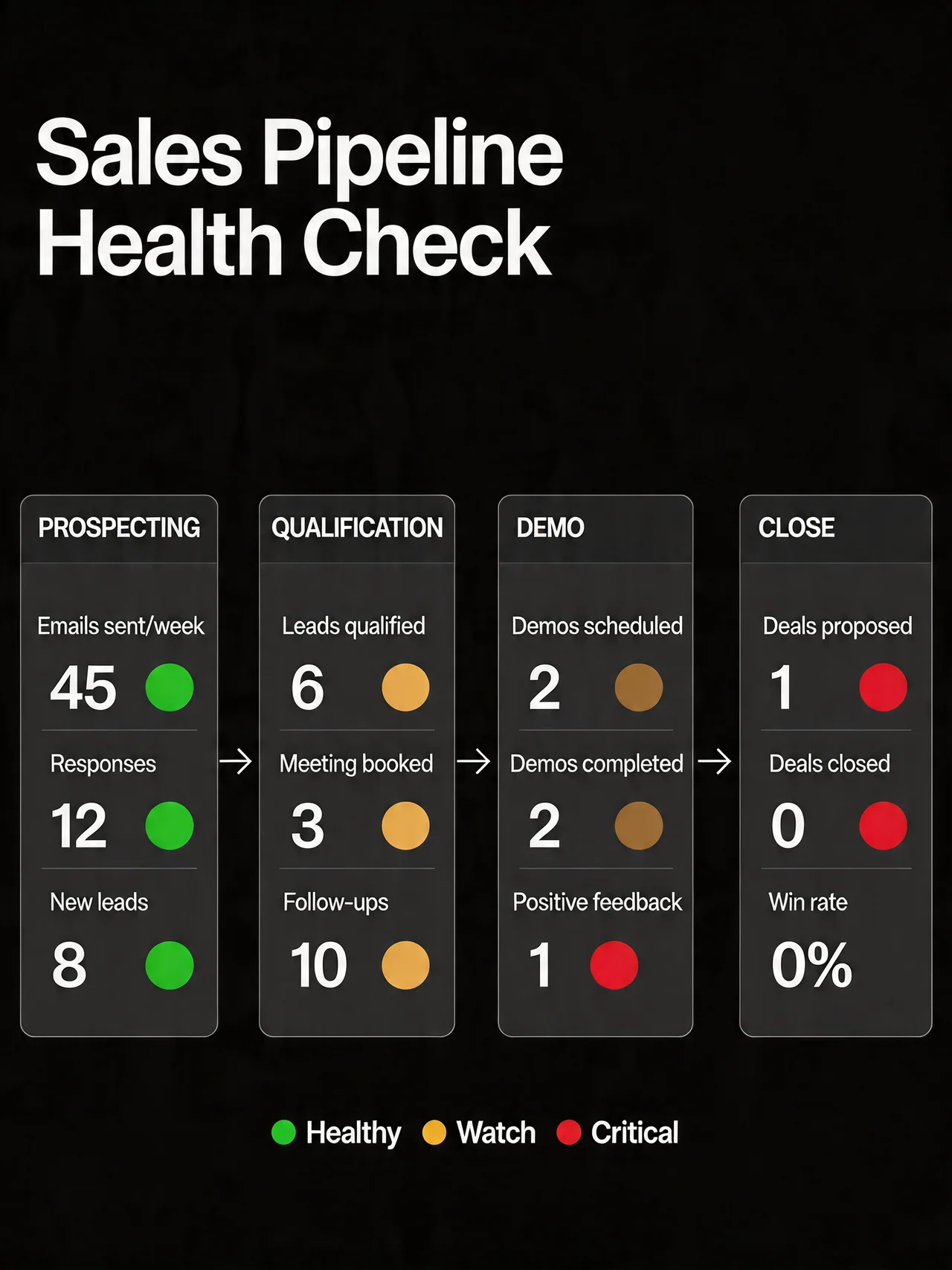
The map: 4 stages + playbook (don’t mix metrics)
Each stage answers a different business question. If you mix stages, you make the wrong decisions: you chase more leads when the real problem is the demo, or you change pricing when the real bottleneck is qualification.
- Stage 1 — Pipeline: How do you generate qualified meetings consistently?
- Stage 2 — Qualification: Does this account have a real problem, priority, and ability to buy?
- Stage 3 — Demo: Do you connect the solution to business impact (not a feature tour)?
- Stage 4 — Follow-up & close: Do you convert interest into a decision with cadence and a clear next step?
- Sales playbook: Is the method documented so the team can reproduce results?
"💡 **Key Insight:** Your bottleneck always lives in one primary stage. Spot it early and growth unlocks without adding chaos."
Stage 1: Pipeline generation (fill the calendar)
The funnel doesn’t start at the demo. It starts when someone agrees to talk. If you generate too few meetings—or low-quality ones—everything downstream breaks. With a small team, prioritise one primary channel and one support channel. Mastering one beats running five poorly.
Outbound with intent: useful volume + iterated message
For B2B SaaS, outbound is still the fastest way to validate messaging and create first conversations—if segmentation is tight and follow-up cadence is real. Use this practical structure: B2B cold email sequence.
- Define an operational ICP using signals (industry, size, stack, visible problem).
- Run 5–7 touches per account with varied angles and value.
- Measure positive replies and qualified meetings—not just opens.
- Iterate weekly based on real objections captured in calls.
Inbound as a trust layer
Even if outbound is your engine, you need a trust base: a services page, cases, a pillar guide, and a clear contact path. If the prospect looks you up and can’t quickly understand what you do and for whom, you lose meetings to credibility friction. Support this with lead generation services and your guides hub.
Minimum metric for Stage 1
If you don’t know how many qualified meetings you generate per week and by channel, you can’t plan growth. Stabilise that metric before scaling spend or headcount.
"⚠️ **Watch Out:** More activity doesn’t always mean more pipeline. If sends go up but qualified meetings don’t, the issue is usually message or segmentation."
Stage 2: Qualification (before you give away the demo)
A meeting without fit isn’t an opportunity—it’s hidden cost. If you run demos for people with no real problem or no decision power, you inflate the calendar and crush conversion. Qualification protects time and focus.
- Problem: is the pain current and costly, or just theoretical interest?
- Priority: is the impact enough to move resources now?
- Decision power: is the decision-maker present—or the person who can unlock them?
- Timing: is there a target date or event forcing change?
CRM discipline in this stage
Without clear notes, qualification becomes opinion. Define mandatory call fields and block stage progression when critical data is missing. This prevents a pipeline full of ‘pretty’ but empty deals.
If you’re still selling alone, this stage is the foundation for getting out of the bottleneck. This guide helps: if the founder is the only seller, you won’t scale.
Stage 3: Demo and value framing
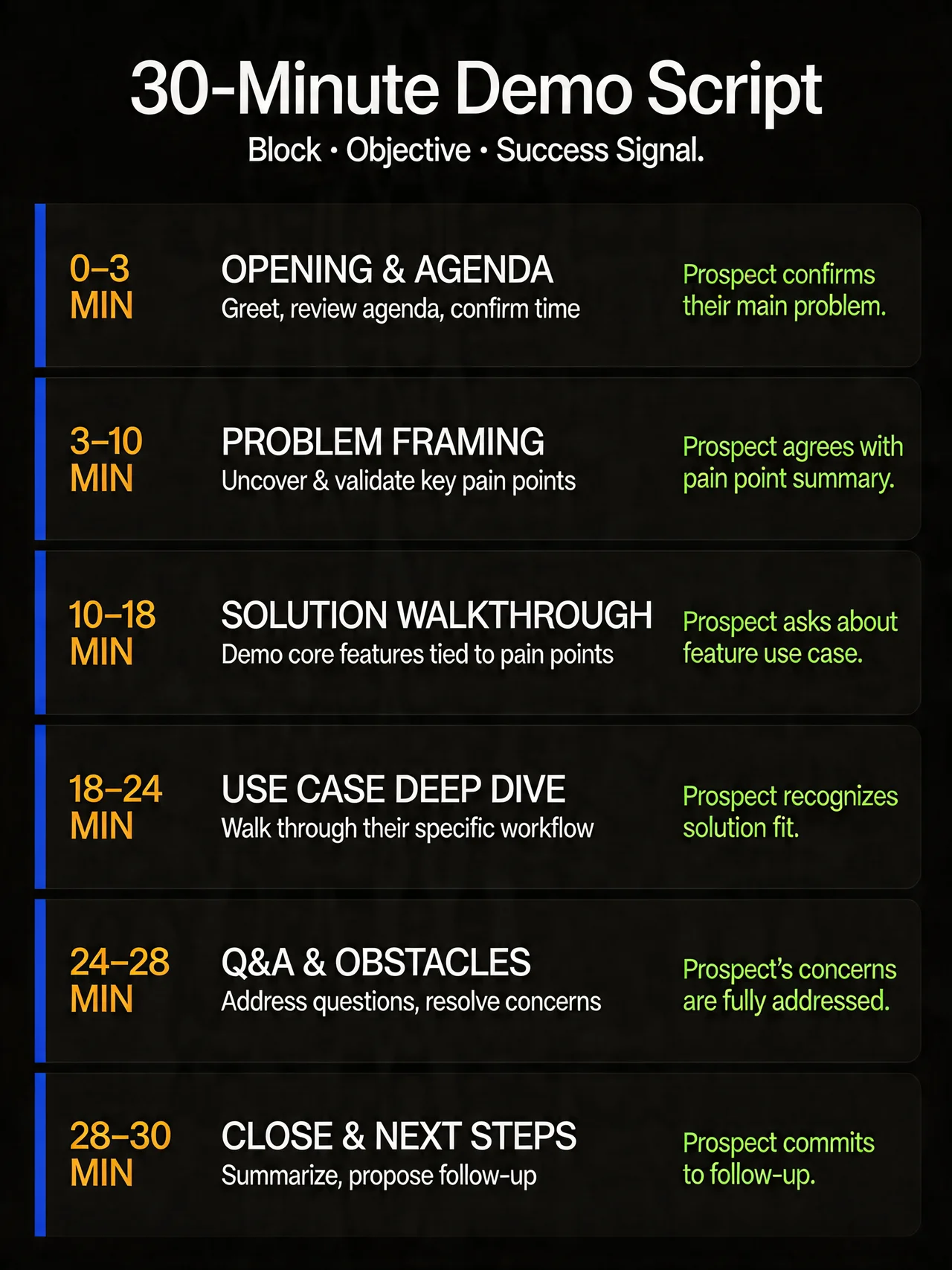
A demo isn’t showing product—it’s building a decision. If the prospect ends with “interesting” but no next step, the conversation failed. Every demo block must connect to a concrete business impact.
- Open with agenda and success criteria for the call.
- Recap the problem, priority, and cost of inaction in their own words.
- Show only the use cases that impact that problem.
- Surface objections before pricing/proposal.
- Close with a scheduled next step and clear owner.
Objections: treat them as data, not friction
Repeated objections are market feedback. If they repeat, update your script and enablement assets. If you get stuck here, review why your SaaS demos don’t convert and closing tactics in the demo close library.
Stage 4: Follow-up & close (post-demo or post-proposal cadence)
This is where margin is won or lost. Many viable opportunities die due to erratic follow-up. Post-demo cadence isn’t “reminding” prospects—it’s helping them decide with context, proof, and a clear next step.
- Define a post-demo sequence with timing and goal per touch.
- Alternate social proof, objection resolution, and value recap.
- Avoid empty “just checking in” emails. Every touch must add something.
- Tag the real reason for blockage and loss to improve the system.
Closing metrics that matter
Track days per stage, proposal→won rate, and real loss reasons. With those three signals, you can adjust message, qualification, or demo before the quarter ends.
Sales playbook: where the process becomes scalable
A playbook turns experience into a system. It should include ICP and anti-ICP, messaging by segment, CRM stages, call scripts, an objection library, and follow-up rules. Without it, every new hire resets to zero.
30/60/90 rollout plan
- 30 days: define stages, metrics, and a minimum CRM structure.
- 60 days: standardise discovery, demo, and scenario-based follow-up.
- 90 days: team training, weekly KPI reviews, and continuous improvement.
"📌 **In Short:** What isn’t documented doesn’t scale. What isn’t measured doesn’t improve."
Summary and next step
If you want to scale B2B SaaS sales, design the process before you accelerate volume. First clarity in stages and metrics; then more channel, more people, more investment. Order matters.
Do a quick audit today: review your last 20 opportunities and tag the stage and real loss reason. If you can’t do that with reliable data, you need to organise the system. You can start with a sales diagnosis and B2B lead generation.
Immediate operating checklist
- Does each stage have a definition and exit criteria?
- Does every deal have a next step with a concrete date?
- Are you tracking stage conversion weekly?
- Is the team using one version of the script and playbook?
Frequently asked questions
- How long does it take to implement a B2B SaaS sales process?
- A first functional system can be operational in 30–90 days depending on complexity and team maturity. The key is a minimum viable version: clear stages, stage metrics, and follow-up discipline. Then you optimise using real call and close learnings.
- Should I hire sales reps before the process is defined?
- Usually no. Without a process, a junior gets stuck and a senior improvises a method that may not fit the business. Define the system, playbook, and metrics first. Then hire profiles to execute and scale with less friction.
- Which metrics are non-negotiable in this funnel?
- Qualified meetings per week, stage conversion, days per stage, proposal→won, and real loss reasons. With those signals you can identify whether the bottleneck is pipeline, qualification, demo, or follow-up—and fix it before the next quarter is gone.
- Do I need a paid CRM for this to work?
- Not at the very beginning, but you do need discipline. You can start with simple tools if the team logs data and follows stages consistently. As volume and headcount grow, a CRM with automation becomes hard to avoid if you want reliable follow-up.
- How do I know which stage is my main bottleneck?
- Review 20 recent opportunities and tag the stage where they died. If most die before a meeting: pipeline issue. If they die after the first call: qualification or demo. If they reach proposal and don’t close: follow-up and objections are usually the problem.
- Does this process change for high-ticket enterprise SaaS?
- The logic stays the same, but each stage gets deeper and longer. In enterprise you have more stakeholders, more internal validation, and more closing steps. That’s exactly why you need a process and playbook—to keep control as complexity rises.
Rentabiliza: lead gen & positioning
- B2B lead generation in Spain: how to choose
Practical guide for SaaS founders and CEOs in Spain: when to hire B2B lead generation, what deliverables to demand, and how to evaluate real impact in 30/60/90 days.
- How much does B2B lead generation cost?
A realistic breakdown of B2B lead generation cost: what’s included, which variables drive price, and how to evaluate ROI without buying smoke.
- Fractional sales director in Spain for SaaS: when to hire
Practical guide to decide when to hire fractional sales leadership in B2B SaaS, what results to expect, and how to compare it to hiring an AE or a full-time VP.