Plan to get your first B2B SaaS customers (Spain playbook)
If you’re launching B2B SaaS, the initial problem is rarely the technology. It’s commercial: nobody knows you, your message doesn’t fit yet, and every meeting is expensive. The costliest mistake at this stage is hiding behind product and waiting for the market to “discover” you.
At Miranda’s we work with founders who show up in the same place: strong product, zero predictability. The way out isn’t “doing more things”—it’s executing a simple plan with extreme focus: validate a specific ICP, open real conversations, turn learning into a script, and close the first logos with discipline.
This guide gives you a 30/60/90 plan to get your first 10 B2B SaaS customers. If you later want to scale with a system, pair it with the pillar sales process guide.
Phase 1 (days 1–30): validate pain before scaling a channel
Your goal in month one isn’t closing ten contracts. It’s confirming there’s an urgent, repeatable, payable problem in a very specific customer profile. Without that validation, scaling outreach only accelerates burn.
Pick a narrow ICP, not a wide market
- Industry: choose one where the pain is frequent and costly.
- Size: narrow by employees or revenue so messaging is consistent.
- Operational context: use stack/process/regulatory signals.
- Buying trigger: identify the event that forces action now.
When the ICP is well-defined, your message stops sounding generic. Instead of selling “software for everyone”, you speak to one specific problem for one specific account profile—and reply quality jumps.
"💡 **Key Insight:** First customers arrive faster when you reject more profiles than you accept."
Phase 2 (days 31–60): outbound for learning—not ego
Early-stage outbound is the fastest channel because it forces real conversations. You won’t get that feedback speed via SEO in 30 days. For tactical structure, use the B2B cold email sequence.
Minimum cadence to start
- Build a list of 100–200 accounts that match your ICP.
- Run a 5–7 touch sequence across 14 days.
- Write down objections and iterate copy weekly.
- Optimise for meetings—not vanity metrics (opens, likes).
What to say to start a conversation
Don’t sell the product in message one. Sell a short conversation about a specific pain. If the prospect feels you understand their context, you get the meeting. If it feels templated, you get ignored.
If you’re operating in Spain, keep GDPR/legitimate interest and B2B communication best practices in mind. Institutional reference: AEPD.
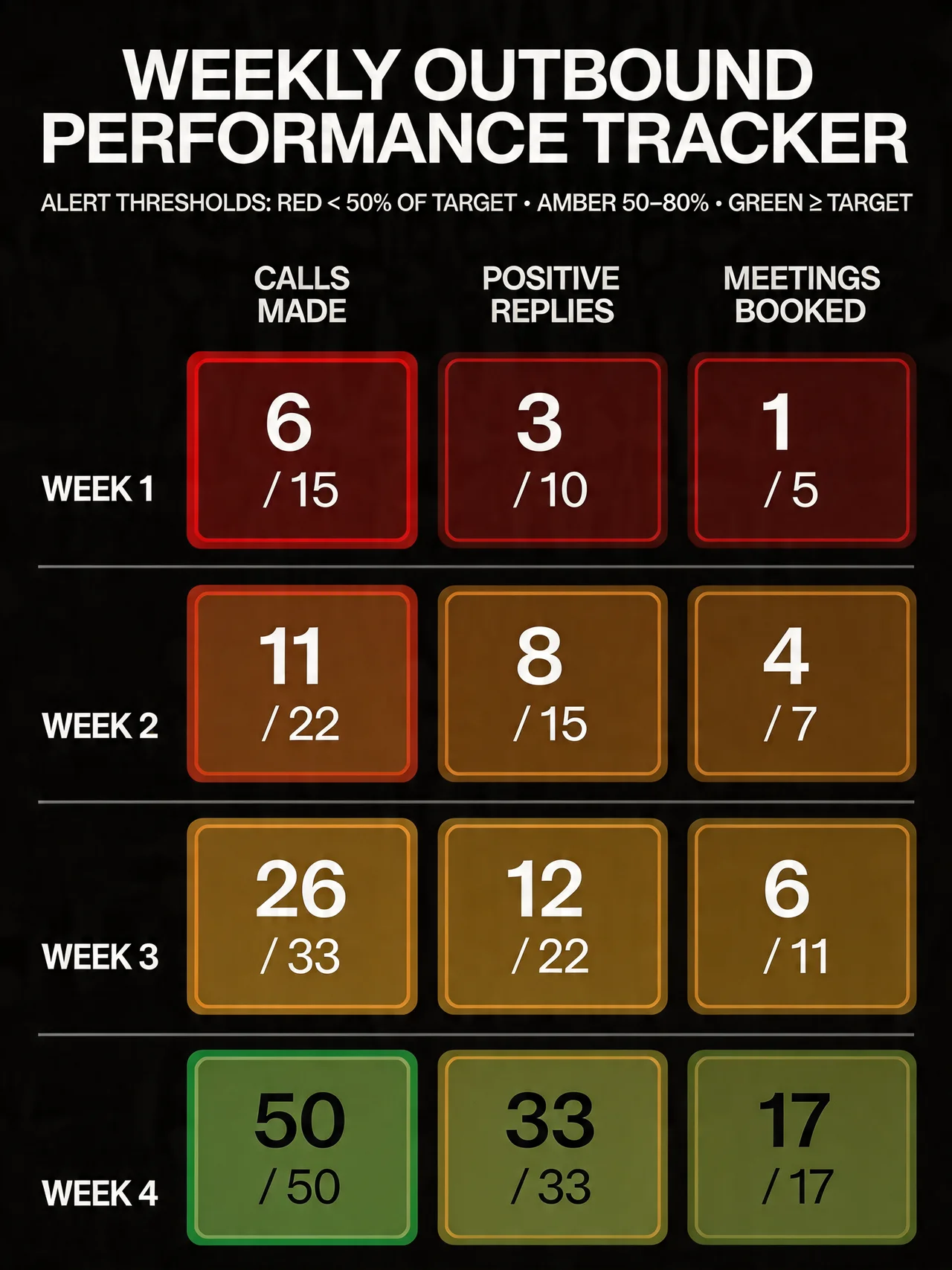
Phase 3 (days 61–90): turn meetings into logos
Once meetings are booked, the focus shifts to conversion. This is where many founders fall into long, unfocused demos. The rule is simple: less feature tour, more diagnosis and economic value.
Call script for first closes
- Short discovery: current context, impact, urgency.
- Selective demo: only what solves that problem.
- Objections: surface them before the proposal, not after.
- Next step with date and owner before ending the call.
If you feel friction here, review why your SaaS demos don’t convert. Early on, the biggest change is usually better conversation—not pricing tweaks.
"⚠️ **Watch Out:** Free doesn’t always accelerate validation. Lots of unactivated free accounts can confuse more than they help."
Metrics that matter for your first 10 customers
At this stage you need a few clear signals—not complex dashboards. Track a small set, weekly, with consistent definitions.
- Qualified meetings per week.
- Meeting → opportunity conversion.
- Opportunity → close conversion.
- Average cycle time (first touch to signature).
- Loss reasons by category.
With these five, you can quickly tell if the bottleneck is top-of-funnel (message/channel) or downstream (discovery/demo/follow-up). Once you close the first logos, document the winning pattern in a playbook so you don’t depend on memory.
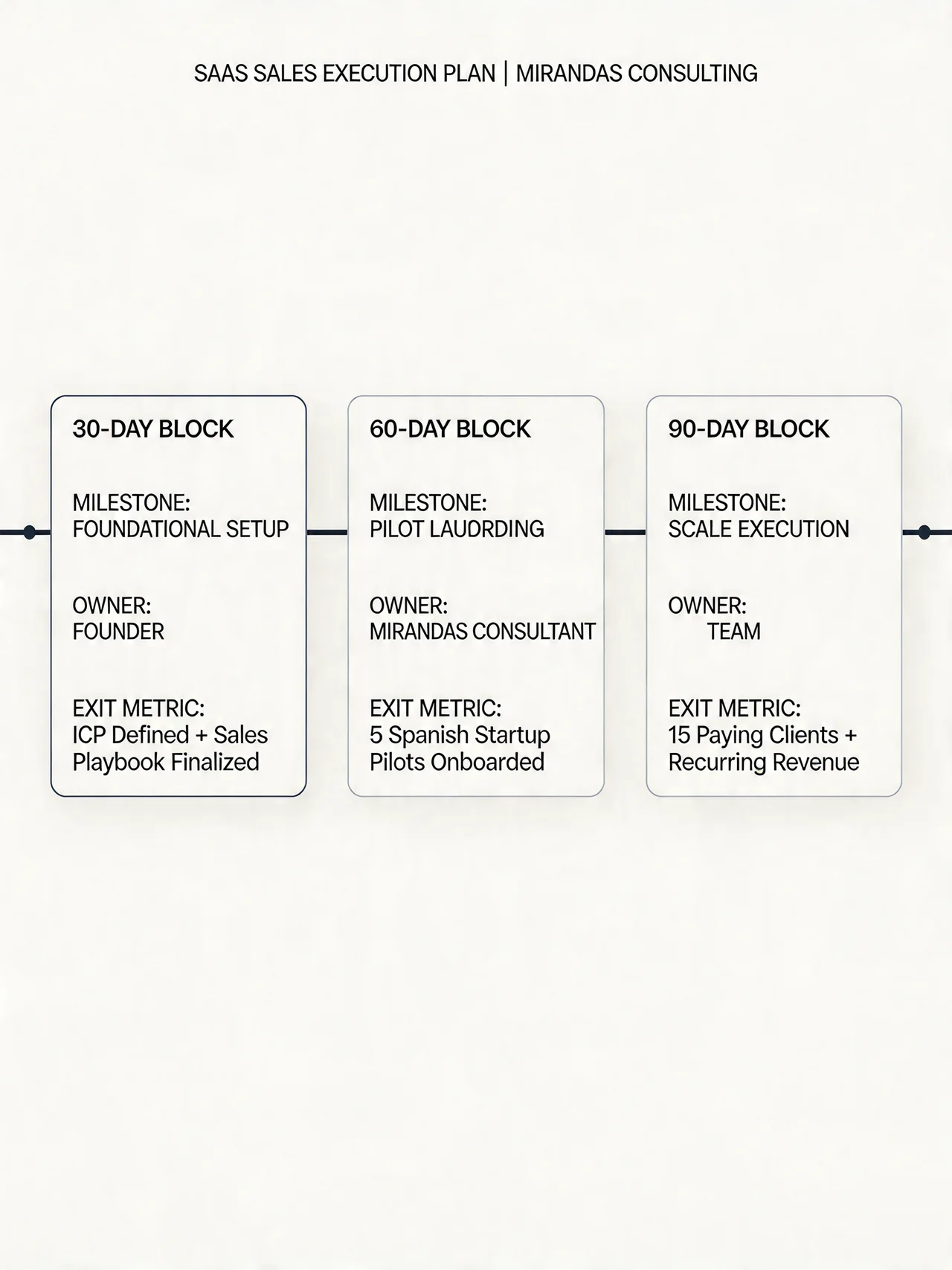
Summary and next step
First customers don’t come from inspiration. They come from focus, useful volume, and weekly message improvement. Validate pain and ICP, generate conversations, then convert with a clear script. That order reduces burn and accelerates learning.
Tomorrow’s plan (60 minutes)
- Pick one ICP for the next 2 weeks.
- Define the main pain you’ll lead with in outreach.
- Build an initial list of 50 accounts.
- Send your first touches today and set weekly reviews.
If you want us to review the plan with you and avoid months of trial and error, request a free diagnosis or see B2B lead generation.
Frequently asked questions
- How much should I invest in tools to start?
- You can start low-cost: a professional email, a basic CRM, and a prospecting tool. The key isn’t the most expensive tool—it’s weekly discipline. With a few well-used tools, you can validate messaging, generate meetings, and close the first logos.
- Is it legal to send cold emails in Spain (GDPR)?
- It can be legal in a B2B context under legitimate interest and professional relevance, but you must be careful with legal basis, transparency, and outreach practices. Always include an opt-out and review your case with legal criteria before scaling volume.
- How many contacts do I need to get the first meeting?
- It depends on messaging, ICP, and channel. As a practical rule, start with 50–100 well-segmented accounts and analyse real replies. If you’re not getting conversations, adjust proposition and targeting before increasing volume. Scaling without learning only burns the list.
- How long does it take to close the first 10 B2B SaaS customers?
- In many cases, 2–6 months depending on price point, decision cycle, and execution focus. Speed improves when you stick to one ICP for several weeks, review metrics weekly, and turn objections into script/product improvements.
- What if I book meetings but don’t close?
- Then acquisition isn’t the problem. It’s usually qualification, demo, or follow-up. Review whether you’re speaking to decision-makers, linking the solution to economic impact, and ending each call with a dated next step.
- When do I move from founder-led sales to a sales team?
- When you have a repeatable pattern: validated messaging, consistent conversion, and a minimum playbook. If you hire before that, the team improvises and you burn cash. System first, then capacity.
Rentabiliza: lead gen & positioning
- Sales consultant for startups in Spain: when to hire
Guide for B2B SaaS founders in Spain: when to hire a lead gen partner, what results to expect in 30/60/90 days, and how to avoid “smoke” lead gen.
- When to hire a lead gen partner for your startup
A founder guide: when to hire a lead gen partner, what to prepare, and what impact signals to expect in 30/60/90 days.