The trap of changing your B2B SaaS sales strategy too early
A SaaS founder we worked with recently told us: “Last month we tried LinkedIn outbound, but we didn’t get demos. Now we’re going to change our ICP to large enterprises and try paid ads.” We see this pattern all the time. You have a product that works, but sales don’t scale. When the pipeline is empty, the instinct is to reinvent your entire B2B SaaS sales strategy.
The problem usually isn’t the channel, the model, or the ideal customer. The real problem is you abandon the strategy exactly at the point of maximum sales friction. Constantly changing direction guarantees your team never develops the skills required for a channel to become profitable. This guide explains why restarting operations keeps you stuck — and how to push through the critical phase.
The emotional cycle of B2B sales
When you implement a new sales motion, your team inevitably goes through phases. At the beginning there’s enthusiasm: optimistic spreadsheet projections and big revenue dreams. It’s blind optimism — motivation fueled by not knowing how hard execution will be.
But once you start calling and sending messages, reality hits. Emails bounce, technical friction is high, decision-makers ignore you, and the few meetings you book get canceled. You enter informed pessimism: now you understand the dirty work the channel demands.
That’s when you reach the most dangerous moment for a CEO: the valley where effort is maximal but results are minimal. It feels like your sales process is broken.
"💡 **Key insight:** 90% of SaaS founders fail to scale because at this point of maximum effort they change strategy instead of fixing the bottleneck. They go back to zero with a new “magic channel”, trapped in a loop with no progress."
The guaranteed cost of changing course
- Every time you change ICP or offer, you take on a transition cost that can freeze revenue for months.
- The grass always looks greener in another channel because you don’t know its technical difficulties yet.
- Jumping from niche to niche prevents you from paying your “skill debt”: you never learn to overcome that market’s specific objections.
Why “boring sales” is what scales
Predictable scaling doesn’t come from inventing a new tactic every week. Real profit in B2B happens in the “boring” zone: repeating, hundreds of times, the actions you already know work — without changing the strategy. To get there, resist shortcuts and focus on systematizing B2B outbound.
According to HubSpot’s State of Sales research, teams with more stable processes and fewer strategic resets achieve meaningfully better conversion rates. Profitability lives in consistency and in precisely optimizing small parts of the funnel — not in demolishing it every quarter.
How to tell if you’re about to quit too early
As a leader, you must distinguish between a product that truly has no market fit and a channel that is simply going through its peak friction. Quit too early and you lose the entire time investment. Persist blindly and you burn cash.
A clear sign you’re pivoting prematurely is believing new automation tools will fix a vague value proposition—or changing everything after five customer “no’s”. When the decision to switch is driven by emotional fatigue instead of statistical metrics, you’ve fallen into the trap.
At Miranda’s we see that the biggest problem is impatience with SaaS cycles. As LinkedIn Sales Insights reports, lack of persistence is a major driver of missed opportunities. Evaluating an outbound channel after only two weeks of execution is an analytical error.
The playbook: how to survive the “no results” phase
If your team spends hours prospecting and can’t book demos, don’t change the goal. Use this timeline to diagnose the problem and cross into a profitable model:
Days 1–30: diagnose your execution debt
Assume that when you start a channel you’re inefficient by default. Track obsessively where the process breaks. Is email open rate below 20%? Do you fail the main cold objection? Your only job is to locate the exact leakage point—not to look for another market.
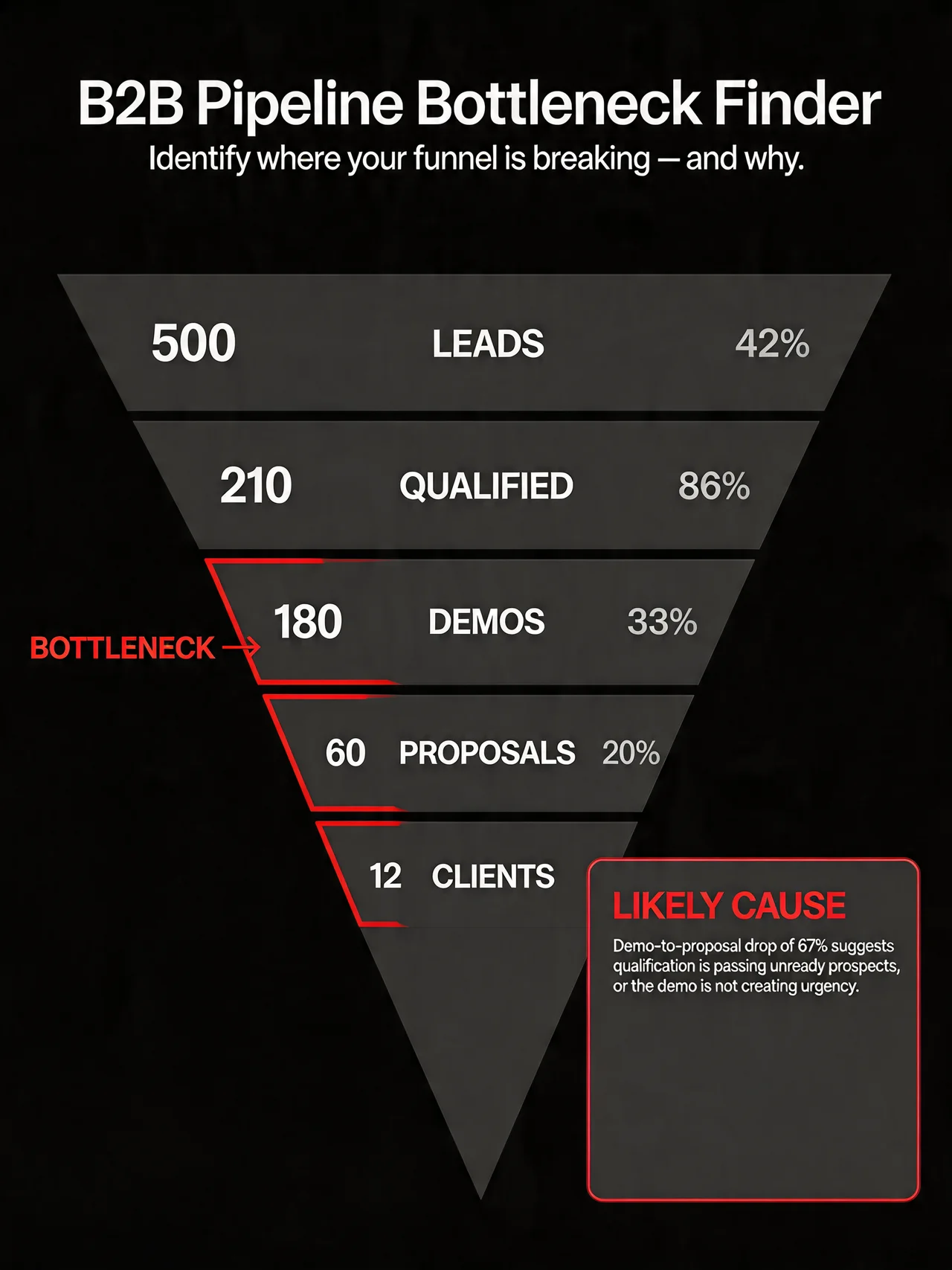
Days 30–60: isolate and optimize one variable
Avoid restarting the whole system and make micro-adjustments. Change only the first line of your outreach message or one question in your call script. Build the skill to solve that specific problem. If you change markets to avoid hard selling, you’ll find the same problems in the next niche.
Days 60–90: move into grounded optimism
Once you break through that variable, the system starts to work consistently. Motivation no longer comes from empty forecasts but from real math: you know exactly how many calls and messages you need to close a deal.
Summary and next step
Starting from zero in another sector because selling got hard is like restarting a video game because you can’t beat level three. The level is still there. You need the skill.
- Don’t change markets out of emotional fatigue; isolate the error in your funnel.
- Accept maximum friction as the key moment to learn and refine the message.
- Read our guide on qualifying customers in B2B SaaS if meetings don’t progress to close.
- Request a free diagnostic of your sales process so we can spot where you’re losing impact.
Frequently asked questions
- When is the right time to change niche or ICP?
- Only pivot when you have enough statistical data showing the market doesn’t value your solution — not because cold selling is hard. If you’ve contacted hundreds of accounts, iterated messaging without success, and there’s still no fit, then the change is justified.
- Why do new channels always feel easier at first?
- Because you’re operating in ignorance of their entry barriers. A new channel has no history of rejection in your company, so you project an ideal scenario. Remember: any solid B2B acquisition strategy takes months to refine execution.
- How long should I run a new outbound strategy before evaluating?
- At minimum, one full quarter of consistent execution. The first 30 days are for technical setup; the next 30 for message adjustment against early rejection; the last month to evaluate real traction. Judging earlier usually leads to false negatives.
- How do I keep my sales team from getting frustrated at peak difficulty?
- Measure early success by activity (calls, opens, contacts) rather than closed deals only. When the team sees leadership focused on fixing bottlenecks instead of constant strategic whiplash, commitment stays higher.