How to cold call: the complete 2026 guide
If you’re reading this, you’re probably in one of two places: you’re about to start cold calling to generate more sales, or you’ve tried it, you’re not getting results, and you want to improve.
Cold calls work—no matter how many people say they don’t. What doesn’t work is the usual: bad lists, generic messaging, zero qualification, poor preparation, and no follow-up.
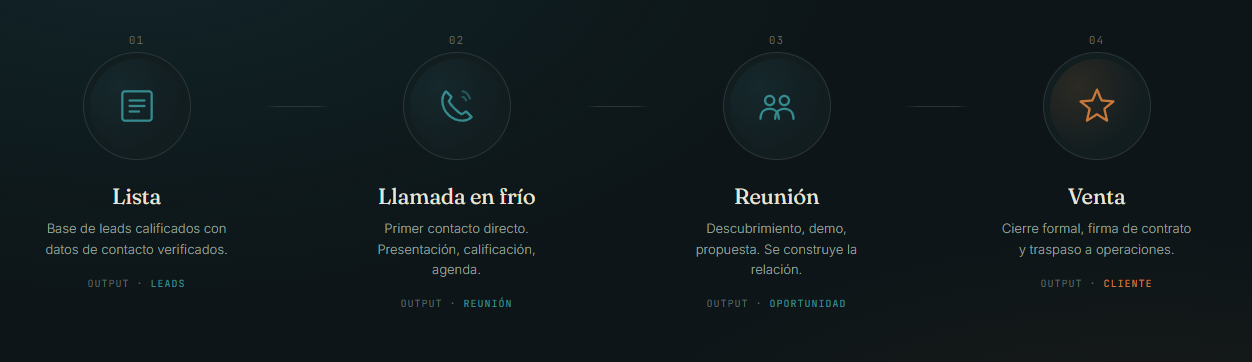
This guide gives you a complete system: database → script → preparation → execution → follow-up → analysis and improvement. For B2B SaaS. In 2026.
"💡 **Key Insight:** The goal of a cold call isn’t to sell. It’s to get a **next step** with a person who **can actually buy**."
What is a cold call?
A cold call is a first phone touchpoint with someone who didn’t ask to speak with you—typically done by SDRs or founders.
Cold calling will help if:
- You sell B2B (SaaS or services) and your ticket requires a conversation.
- You have a clear ICP (or you want to learn it fast through real feedback).
When cold calling won’t help your business:
- You don’t have a clear offer (example of a bad offer: “we help companies grow”—it doesn’t say who, how, or what results, in what timeframe).
- You can’t sustain follow-up (“making a couple of calls a day isn’t enough”).
- You sell B2C to individuals rather than companies.
"⚠️ **Watch Out:** If your list isn’t properly segmented, you won’t get results. You must be clear about who you want to sell to."
What is an SDR (and what they do in SDR sales)?
Let’s start with the basics. An SDR (Sales Development Representative) creates and qualifies conversations. In sales, an SDR doesn’t close the product; they book qualified meetings with the right profile so another seller (usually an Account Executive or Sales Manager) can close.
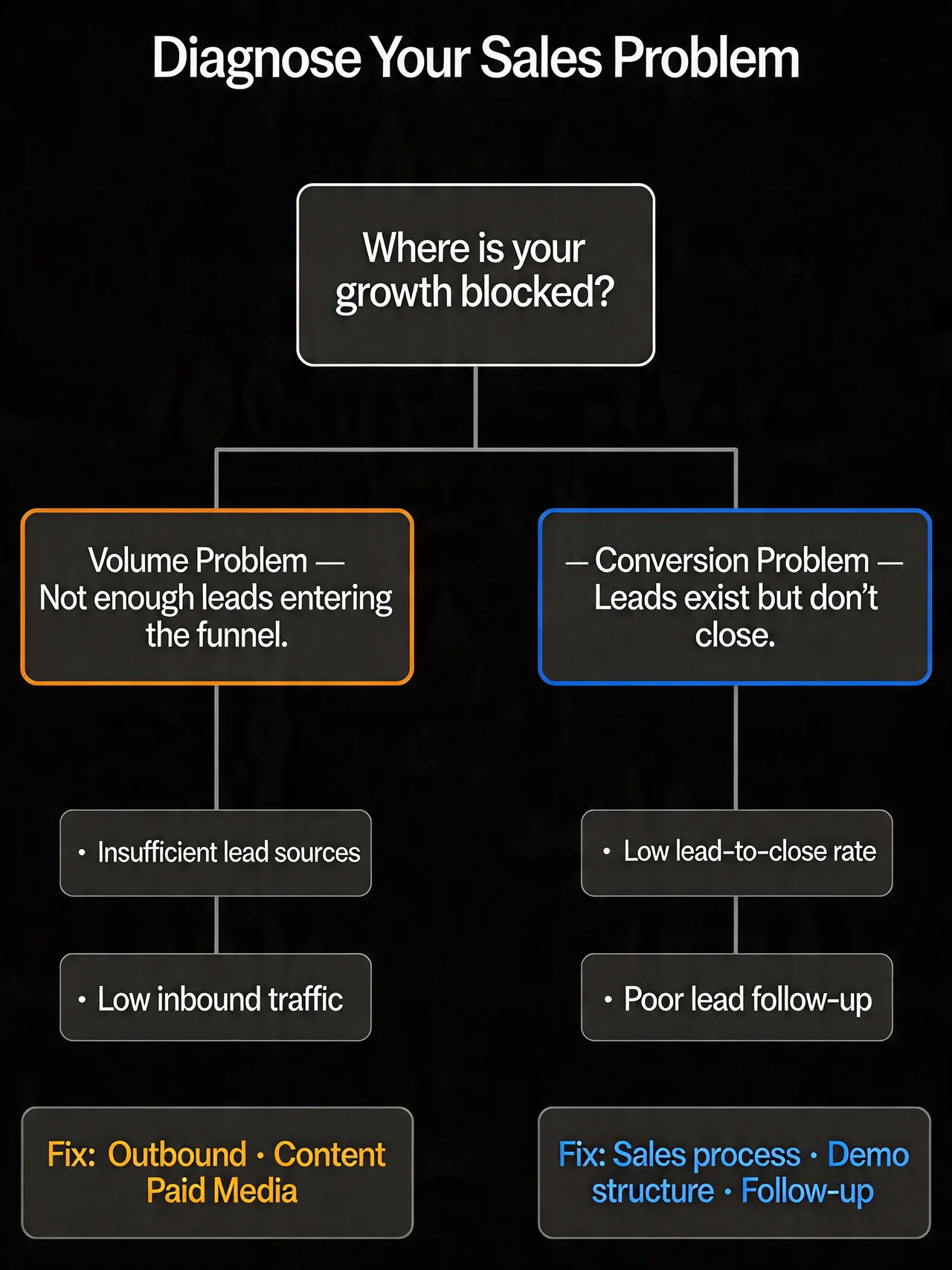
Why does this role exist? It ties into your go-to-market strategy: if your GTM depends only on inbound—leads that come to you—you’ll have good months and dead months. Good outbound gives you control and fast learning. The system version is here: B2B marketing + sales funnel.
Before you call: list, ICP, and offer
The strategy is a sequential process: to start step two, you must complete step one. Step one is deciding who you call and why. If your list doesn’t match your ICP—or your ICP is too generic—your calls won’t convert. Step one is complete when you have a clear ICP, a relevant offer, and a list of companies that match the ICP.
1) Build the database
- Company + person + reason (it can be a signal or a hypothesis).
- Minimum fields: industry, size, current tool, trigger (hiring, CRM change, expansion, etc.).
In short: you want a database of decision-makers in companies that fit your ICP—and you need a reason to reach out. If you solve a real problem, your ICP should show symptoms of that problem.
2) Define the ICP
Define a specific problem, the moment it becomes painful, and the role that feels it and makes the decision. If you haven’t structured this yet, start here: Define your ICP.
3) Build the offer
- I’m calling because… (real trigger).
- What usually happens is… (problem).
- Is that happening to you? (question).
You’re calling someone who didn’t expect your call. If you call without a reason, you won’t get results. If you call pitching your product, you also won’t get results. The key is to understand whether the lead has the specific pain you solve—this is where relevance comes from.
Call structure: opening, pitch, objections, and close
A cold call works when you follow a logical structure. Your opening buys you 30 seconds. Your pitch buys you 10 minutes to handle objections. The close exists only if the problem is real, specific, and measurable.
Before you start: preparation
- Say your opener out loud 5 times before calling. It reduces anxiety and makes you sound natural.
- Block 2 hours per day for cold calls with zero distractions. If you call between meetings or tasks, you won’t see results.
Cold calling is not easy. You’ll get rejected ~80 times out of 100. That’s reality. But if it’s hard for you, it’s hard for everyone. Rejection is the entry fee. If 80% say no, you’re doing the work. You’re training a muscle: talking to strangers + control + next step. Once you have that muscle, you can grow almost any business.
1) Opening: you have 10 seconds to earn the next 30
Most calls die in the first 10 seconds. You need to break the other person’s default pattern: make them smile, think, or at least avoid an automatic response. Sound human, direct, and clear about the exchange: give me 30 seconds and if it’s not relevant, we’ll stop. Here are a few openers:
- Direct: “Hi [Name], we don’t know each other. Give me 30 seconds—if it’s not relevant, you won’t hear my voice again.”
- Disruptive: “Hi [Name], would it ruin your day if I told you this is a cold call?”
- Relevance: “Hi [Name], I’m hoping you can help me: you’re on a short list of [roles] in [industry/geo] that match our ICP. Can you help me understand if this is relevant?”
2) Pitch: talk about their pain, not your product
People’s favorite topic is themselves. Their second favorite is their problems. If your pitch starts with your tool, you become noise. If it starts with the pain you remove, you open a real conversation.
Pitch structure (adapt it to your ICP): “Our customers are usually [role] in [industry/geo]. They typically face three problems: (1)… (2)… (3)… That makes [goal] harder. But you’ll probably tell me you’re happy with the current setup—and now you’ll tell me I ruined your day.”
Why does it work? You add social proof, use the prospect’s language, and invite them to correct you. In B2B, being contradicted is good: it means you’re having a real conversation with a potential customer.
3) Objection handling: the beginning, not the end
If you reached this step, the call is going well. It means you’re talking to a potential customer who recognized the problems you mentioned. In conversation mode, an objection is a request for context or a signal there’s not enough value yet. Cold-call objections usually fall into four buckets: time (not a priority), budget (no ROI), authority (not the decision-maker), or mistrust (they solve it another way or don’t believe your solution will help).
A simple objection sequence
- Validate: “Makes sense / I hear that a lot / Totally fair.”
- Ask permission for a question: “Can I ask you one thing about that?”
- Get information: “When you say [objection], do you mean you’re not experiencing [problem]?” / “What do you mean exactly by [objection]?” / “If you could improve one thing about [topic], what would it be?”
"💡 **Key Insight:** Freezing, running, or getting angry is what an SDR does when they lose control. Validate + ask is what an SDR does to qualify."
4) The close: it only exists if the problem is specific and measurable
You can only close a meeting if the problem exists, is specific, and is measurable. Practical formula: real example + emotional impact → measurable consequence.
3 steps to set up the close
- Get the story: “You mentioned X—can you walk me through the last time it happened, in detail?”
- Find the impact: “How does that affect you personally?”
- Summarize to build trust: “If I’m hearing you right: [summary]. Is that accurate?”
Final push (challenge)
“Can I ask you something directly? Have you always accepted that this is how it is, or is it something you want to change?” This is key—this is where urgency is created.
Close the meeting
“Would it be a terrible idea to sit down for 30 minutes and see if we can help?”
Post-close (checklist)
- Confirm the invite/link arrived and was accepted.
- Ask: “Any reason you’d cancel at the last minute?”
- Confirm agenda and attendees.
- Call 24h before to confirm.
If you follow this and you generate demos but they don’t convert, the issue may not be qualification—it may be the demo itself. Go deeper here: why your SaaS demos don’t convert.
Minimum qualification (BANT) so you don’t fill your pipeline with noise
Now you know how to book meetings with cold calls. Unfortunately, not every meeting will be qualified. Your job is to check four core points to decide whether you should invest time in a demo. For that, use BANT.
- Budget: can they pay?
- Authority: are you speaking to the decision-maker?
- Need: is the pain real—and is there a cost to doing nothing?
- Timing: are they ready to solve it now?
If two or more fail, don’t book “just in case.” Nurture instead. If booking is free, your calendar becomes your GTM landfill.
Metrics: what to review weekly
The goal is continuous improvement. What you don’t measure, you can’t improve.
- Conversations per 100 dials (list quality + timing).
- How many calls moved to pitch / objections / close (stage quality).
- Meetings booked per conversation (conversion).
- Show rate (close quality + 24h confirmation).
- SQL rate and tagged “no” reasons (qualification quality).
Minimum tech stack
Tools help you focus on the calls. For lists and enrichment, use data enrichment tools. To log meetings and hand them to the AE, use a CRM. For calls, use a calling tool with logging and recording.
- Enrichment: Lusha/Apollo (depending on whether you rely more on LinkedIn or built-in databases).
- CRM: HubSpot (all-in-one), Attio (tech-first), or ClickUp (all-in-one-ish).
- Calling: a VoIP tool with logging + discipline. Example: AirCall.
If you’re building outbound from scratch and you want realistic expectations on timelines, see: B2B outbound lead gen: how long it takes.
Summary and next step
If you want cold calling results in 2026, stop looking for the perfect script and build a system: an opener that buys 30 seconds, a pain-based pitch, objections as conversation, and a close built on story + impact + summary.
FAQ
- How many cold calls do I need to book a meeting?
- There’s no universal number. What matters is meetings per conversation, not per dial. If you talk to a real ICP and your message is clear, your main lever is improving “next step / conversation” and sustaining follow-up with a cadence.
- What should I say in the first 10 seconds?
- Name + context + pain + question. One sentence to orient them and one question to open conversation. If you sound like a pitch, you lose; if you sound like diagnosis, they listen. The goal is to earn permission for 30–60 more seconds.
- What is an SDR and why is it key in B2B SaaS?
- An SDR creates and qualifies conversations to feed pipeline without relying on the founder. If the SDR qualifies poorly, the AE lives inside useless demos and conversion drops. Strong SDR execution protects the calendar and increases opportunity quality.
- Cold calls alone or with other channels?
- Better as multi-channel: call + email + LinkedIn. The call accelerates feedback; email sustains follow-up. If you separate channels, you lose consistency. In B2B, relevant repetition (not volume) wins.
- How do I handle “send me an email” without losing control?
- Accept, narrow, and set a date. “I’ll send it, but to avoid sending fluff: is it X or Y you care about? And I’ll follow up Tuesday at 11.” Without a date, you’re out. The goal is to turn email into a bridge, not an excuse.
- How does cold calling fit into my go-to-market?
- Outbound (including cold calls) is a GTM lever to generate demand and learn with control. Inbound gives you intent; outbound gives you speed. Healthy systems share the same ICP, message, and qualification criteria.